

Our operational practices, including energy, waste and water management, as well as climate change management, may create adverse impact on the environment and natural resources.
A sustainability strategy framework has been established to guide resources and efforts into specific areas that are most crucial to our sustainable roadmap. The framework streamlines the process of assessing ESG-related risks and opportunities in our daily operations and focuses on four strategic aspects, to formulate a structured approach in launching impactful initiatives across all facets of our business.
To better address the emerging trends in sustainability and stakeholders’ expectations, the ESG Committee reviews the framework regularly and makes refinements as appropriate. In 2024, the ESG Committee included the United Nations Sustainable Development Goals (“UNSDGs”) in the sustainability strategy framework to align with global sustainability standards.
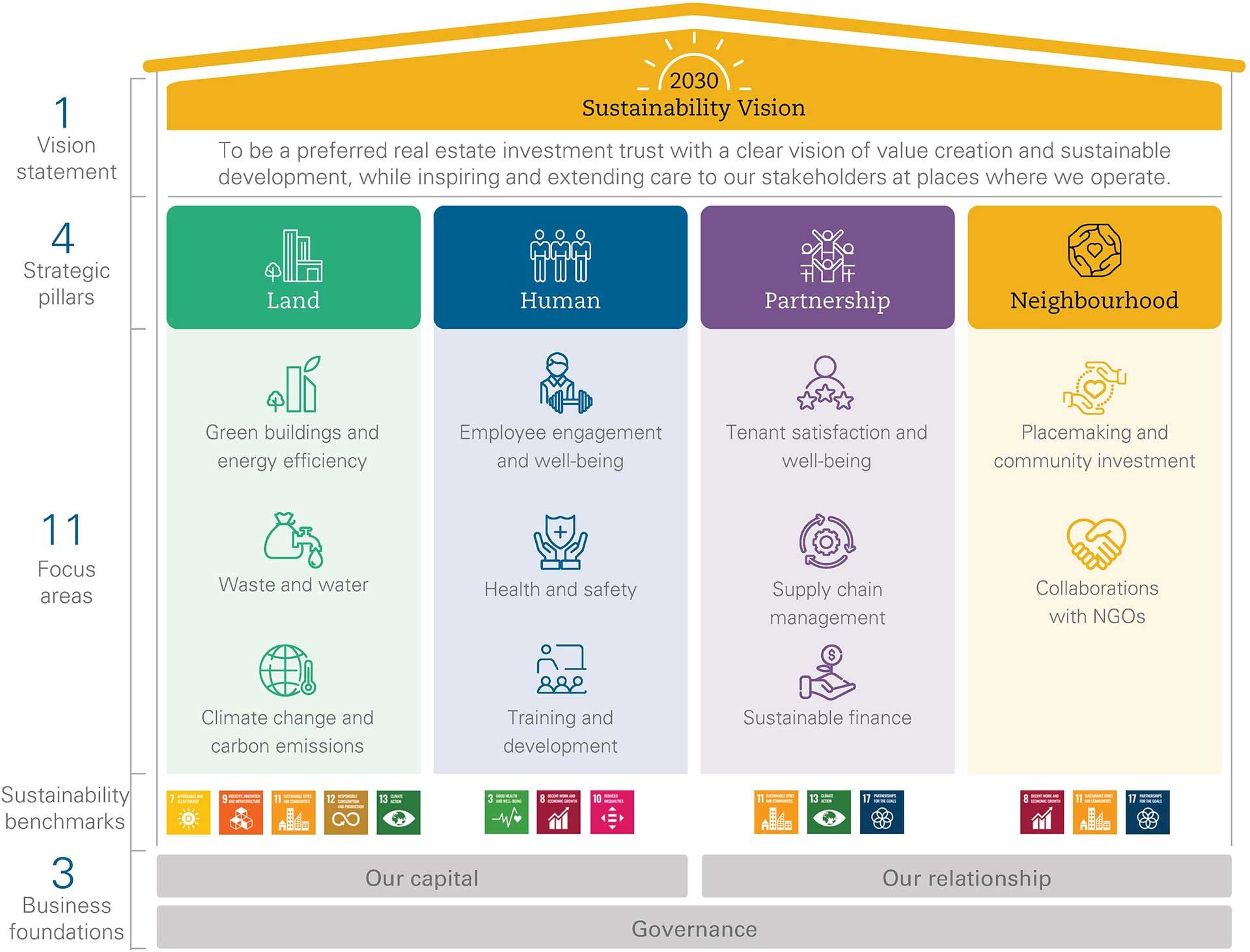
Strategic pillars
Indispensable building blocks for business continuity, where sustainability risks and opportunities are considered and addressed.
Focus areas
ESG priorities that form the basis for our sustainability goals and targets. Notably, since the formation of the Corporate Culture Committee in 2024, the focus area “Training and Development” has been renamed to “Corporate culture and training”.
Sustainability benchmarks
Alignment of our focus areas with UNSDGs.
Business foundations
Good corporate governance is fundamental to long-term business viability, while “capital” and “relationship” represent two key aspects of our core business foundations.